In this guide
Fiber supports liver health mainly by improving how your body handles blood sugar and fats, feeding beneficial gut bacteria, and reducing the strain that excess fat can place on the liver. The practical question is not whether fiber is good for you — it is which fiber-rich foods to eat, how often, and in what portions. This article answers that directly, then explains the trade-offs worth knowing.
Most adults should aim for roughly 25–38 grams of fiber per day, depending on age and sex, according to widely used dietary guidance. The foods below are practical ways to reach that target while also delivering antioxidants, healthy fats, or both — the nutrient pattern that liver-supportive eating tends to follow [S1][S2].
Start With These Fiber-Rich Foods
The list below focuses on foods you can eat daily or most days. Portion estimates are approximate; use them as a guide rather than a prescription.
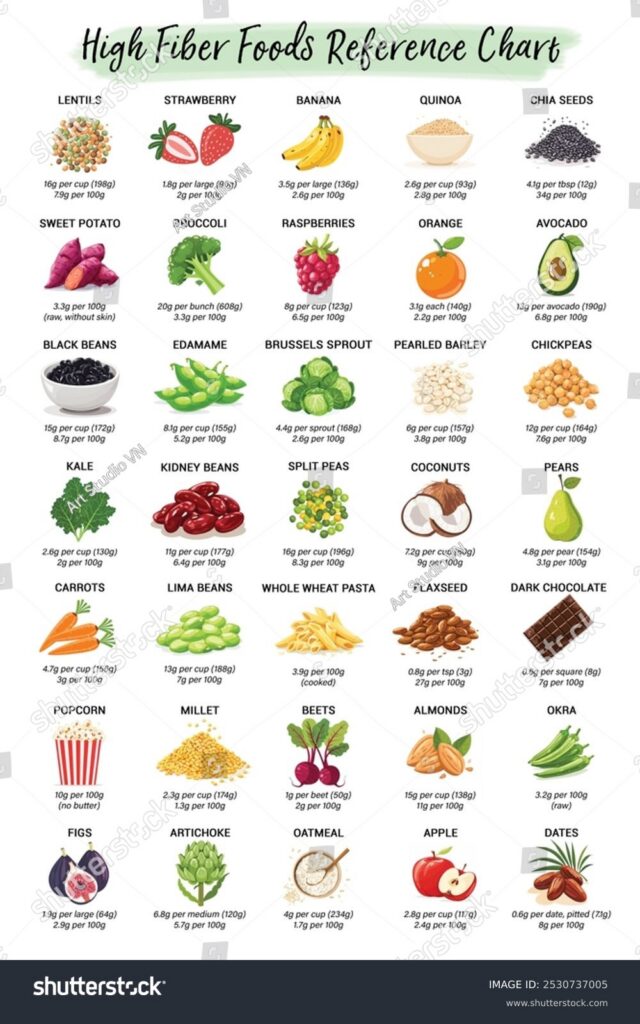
| Food | Approx. fiber per serving (illustrative) | Why it fits a liver-supportive diet | Practical way to eat it |
|---|---|---|---|
| Oats and oatmeal | 4 g per 1/2 cup dry oats (estimated) | Easy fiber source that supports liver health and may help protect against conditions such as cirrhosis [S1] | Cook with water or milk; top with berries and nuts |
| Beans and lentils | 6–8 g per 1/2 cup cooked (estimated) | High in fiber and antioxidants; a staple of liver-supportive eating patterns [S2] | Add to soups, salads, or grain bowls |
| Berries | 4–6 g per 1 cup (estimated) | Fiber plus antioxidants, both highlighted in liver-friendly diets [S2] | Fresh or frozen; mix into yogurt or oatmeal |
| Whole grains (brown rice, quinoa, barley) | 3–6 g per 1/2 cup cooked (estimated) | Whole grains are part of the diet pattern associated with liver health [S1] | Swap for refined grains at one meal per day |
| Cruciferous vegetables (broccoli, cabbage, cauliflower) | 2–5 g per 1 cup cooked (estimated) | Listed among fiber- and antioxidant-rich liver-supportive foods [S2] | Roast or steam; add to stir-fries |
| Avocado | About 10 g per whole fruit (estimated) | Rich in fiber and healthy fats, two nutrients linked to lower likelihood of liver disease; animal studies suggest benefits, but human direct evidence is still limited [S2] | Slices on toast, in salads, or blended into smoothies |
| Nuts and seeds | 3–5 g per small handful (estimated) | Fiber and healthy fats appear in liver-supportive eating patterns [S2] | A handful as a snack; seeds on yogurt or salads |
| Fruits such as apples and pears (with skin) | 4–5 g per medium fruit (estimated) | Fruits are part of a diet rich in fiber that supports liver health [S1] | Eat whole rather than juiced |
Note that the fiber figures above are approximate values I compiled for illustration; packaging and variety will differ. The important point is the pattern: several of these foods most days, not a single “superfood.”
Build a Daily Plate That Works
A useful way to turn the table into habits is to anchor fiber to meals you already eat.
Breakfast
Oatmeal with berries and a spoon of ground flaxseed can start the day with 8–10 grams of fiber. Oatmeal is specifically noted as an easy way to add fiber that supports liver health [S1].
Lunch
A grain bowl with half a cup of beans, a cup of vegetables, and a whole-grain base covers another 10–12 grams. Beans and cruciferous vegetables earn their place for both fiber and antioxidant content [S2].
Dinner
Include a vegetable side and choose whole grains over refined ones two or three times a week. If you eat avocado, half a fruit adds about 5 grams and brings healthy fats alongside the fiber [S2].
Snacks
Whole fruit, a small handful of nuts, or vegetables with hummus are simple ways to close a fiber gap. These foods match the fiber-and-healthy-fat profile that liver-supportive diets emphasize [S2].
What Else Belongs in the Pattern
Fiber does not work alone. The broader diet linked to liver health includes fruits, vegetables, whole grains, and fatty fish, and coffee is frequently mentioned as a supportive beverage [S1]. Green tea is often grouped with coffee as a complement to a balanced diet [S2].
At the same time, no single food is uniquely “good for the liver.” As one review notes, there are no five specific foods considered especially beneficial; it is the overall pattern that matters [S1]. That is why a table of foods is a starting point, not a guarantee.
Watch the Trade-Offs
More fiber is not automatically better, and some caveats deserve attention.
Increase gradually
Jumping from a low-fiber diet to 35 grams overnight can cause bloating, gas, and cramping. Add one fiber-rich food every few days and drink enough water.
Fiber is not a treatment
A high-fiber diet supports general liver health, but it does not replace medical care for diagnosed liver disease. If you have a liver condition, ask your clinician or a dietitian before making large dietary changes.
Evidence varies by food
Some claims rest on animal studies. Avocado, for example, has been associated with less liver fat and improved liver function in animal research, but direct human studies on avocado and liver health are still lacking [S2]. Treat such findings as promising, not proven.
Limit what works against you
Liver-supportive eating also means limiting foods that work against the pattern, such as heavily processed foods and excess added sugar. The same guidance that recommends fiber-rich foods also advises limiting certain foods [S1].
A Simple Daily Checklist
To keep this practical, aim for the following most days:
- One whole-grain serving at breakfast (oats, whole-grain bread, or barley).
- One serving of beans or lentils at lunch or dinner.
- Two to three servings of vegetables, including a cruciferous option several times a week.
- One to two whole fruits, especially berries.
- A small handful of nuts or seeds.
- Water with meals to help fiber do its job.
If you follow that checklist consistently, you will likely land in the recommended fiber range without counting grams. The goal is a sustainable pattern built on oats, beans, berries, vegetables, whole grains, nuts, and avocado — foods that combine fiber with the antioxidants and healthy fats that liver-supportive diets rely on [S1][S2].
Sources
- [S1] Liver health diet: 12 foods to eat, what to limit, FAQ, and more (medicalnewstoday.com)
- [S2] 13 Foods Good for the Liver – GoodRx (goodrx.com)